

On September 16, the Dicastery for the Doctrine of the Faith (DDF) released a new note about interreligious dialogue titled A Journey of Hope: Sixty Years of Interreligious Dialogue and Fraternity in the Light of the Conciliar Declaration Nostra Aetate. There’s a lot of good to say about A Journey of Hope (JOH); it’s an excellent catechetical text outlining the development of the Catholic Church’s teaching about and relationship with other religions during and since Vatican II. It’s a text I’ll likely come back to often for its emphasis on dialogue and trenchant criticism of fundamentalism.
I want to highlight one element of this doctrinal note here, specifically, how its own internal inconsistency is a microcosm of a greater struggle happening in the Church as she “constantly moves forward toward the fullness of divine truth” (Dei Verbum 8).
Before I get too far, I want to begin with a personal story. Several years ago, I resigned as the Director of Religious Education from my home parish. For nearly eight years I held that position working for a pastor who exhibited a lot of narcissistic behavior. His lying and bullying escalated through those years, culminating in him firing a colleague, telling the parish that she quit, publicly lying about me, and accusing me and the rest of the lay ministry staff of “grave sin” in the parish bulletin.
There’s a lot more that could be said about these events, but I want to focus on what happened after. Even though the diocese I was in at the time knew exactly what was going on, they chose not to remove the pastor or defend my reputation or the reputation of my colleagues. Several months later the pastor resigned for health reasons and the priest at a neighboring parish was our interim pastor for a year. After he came in, he met with and listened to me and all of the former staff and performed empathy, but he chose not to correct any of the lies that the previous pastor had written or say anything critical of his predecessor. He just wanted to move on.
And he wasn’t alone. Shortly after the new pastor started, he held a parish town hall meeting to address any questions parishioners had about the transition. When the time for open Q&A began, the questions were about why a Mass time changed and why the votive candles in our parish cost more than the candles at the neighboring parish. The community wanted to forget about the previous pastor and just move on.
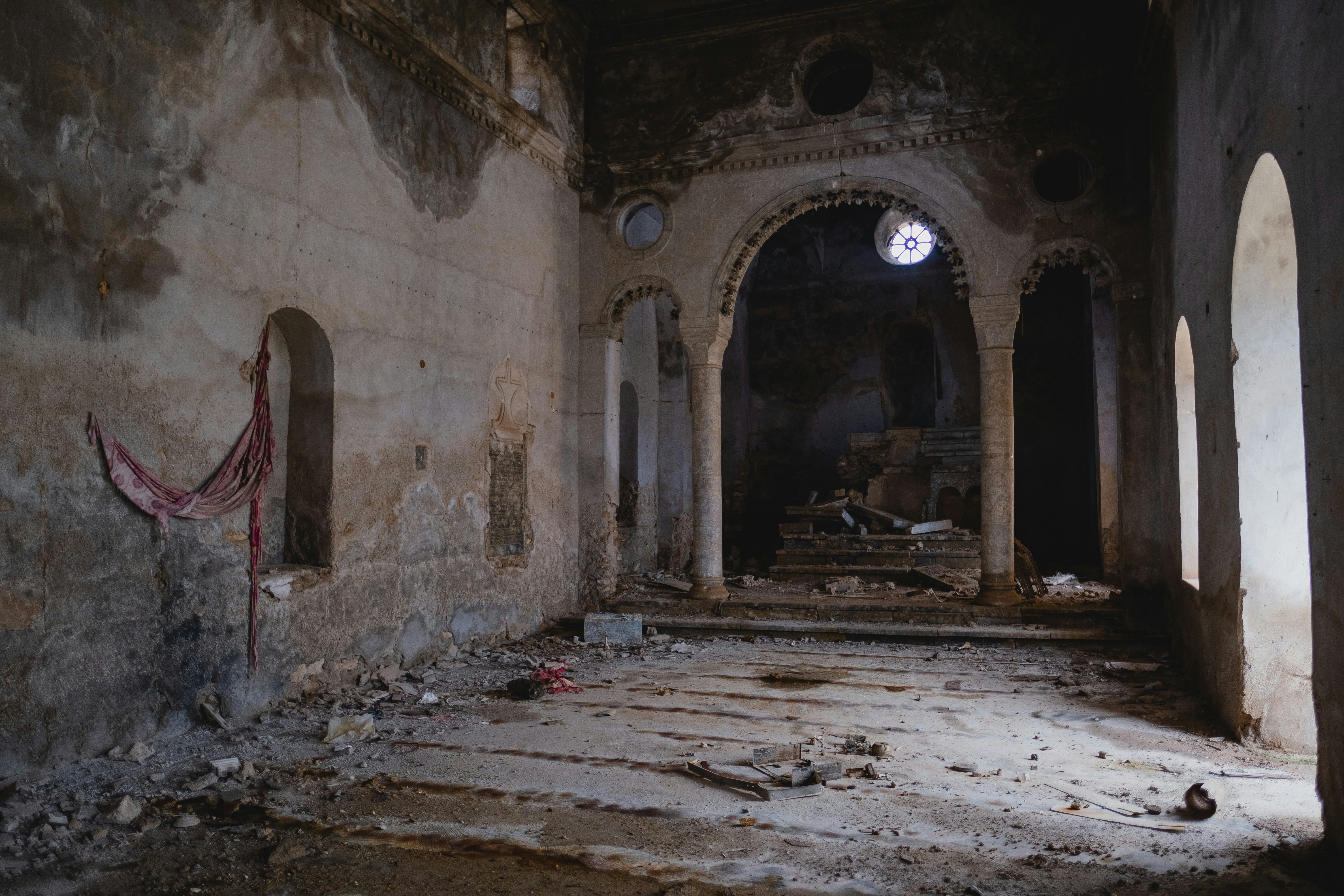
It took me a couple of years to put into words why this part of that experience hurt as much as it did. Eventually, a friend shared an illustration that I deeply resonated with. It felt like a bomb had gone off in my parish and there was this huge flaming crater in the middle of the church. But everyone in the community, including the new pastor, just wanted to ignore it, walk around it, pretend it wasn’t there, and eventually forget it existed at all. It felt like there was this mass pretending that the bad thing didn’t really happen.
As I continued researching trauma and, more importantly, listening to survivors of abuse in the Church, I realized that the pain from silence and denial, and a deep longing for the truth to be told, was far from uncommon. The wider community’s move to pretend that nothing bad happened often feels like a refusal from others to listen to survivors’ experiences and engage with reality as it really is. Victims of abuse in the Church become the turd in the ecclesial punch bowl; their stories are an assault on the pleasant fiction that things in the Church aren’t that bad.
These experiences echoed what I would later come to read in Dr. Judith Herman’s book, Truth and Repair: How Trauma Survivors Envision Justice. She said that the “wounds of trauma” are not only caused by the abusers, but also by “the actions or inactions of bystanders—all those who are complicit in or who prefer not to know about the abuse or who blame the victims.” In fact, the community’s silence often causes “even deeper wounds” than the abuse itself. Herman said, “These wounds are part of the social ecology of violence, in which crimes against subordinated and marginalized people are rationalized, tolerated, or rendered invisible. If trauma originates in a fundamental injustice, then full healing must require repair through some measure of justice from the larger community.”
Herman goes on to say [emphasis in original], “The survivors whom I interviewed about their dreams of justice were in unanimous agreement on this first point: They wanted the truth to be known.”
In other words, a necessary step towards justice is truth telling. Forgetting and moving on, pretending that the bad thing never happened, perpetuates injustice. This is affirmed by Pope Leo in Magnifica Humanitas…
Read the rest at Where Peter Is:
https://wherepeteris.com/forgetting-the-past-is-not-justice/
So true, Paul: "refusal from others to listen to survivors’ experiences and engage with reality as it really is." Psychiatrist and author Judith Herman, in her groundbreaking book: "Father-Daughter Incest," (1981), accurately outlines the psychology of it for *all* of us, “The ordinary response to atrocities is to banish them from consciousness. Certain violations of the social contract are too terrible to utter aloud: this is the meaning of the word unspeakable.” This is what every survivor (and loved one, allies, advocates, faithful in the pews,) battles against, the taboo to even think of it, much less speak it, and thus we are socialized to deny, suppress and bury it all, even from our own minds.
Thanks for this example of internal inconsistency within the Catholic Church, Paul. There is no moving on without facing the trauma caused by clerics and clericalism.Thanks too for your work in expanding the acknowledgement of "abuse" to include more than sexual abuse. Spiritual abuse, perpetrating it and also counting acceptance of it as holiness, is an element of our culture.