

Five years ago, almost to the day (Nov 4, 2021), I posted my very first thing on this Substack. It was titled, “The Pope Francis Generation: What’s in the name?” and I reflected on how Pope Francis’s vision of Catholicism was so different from the vision of Catholicism I inherited from the JPII Generation. I wrote:
The spirituality that I inherited from members of the John Paul II generation contained a lot of fear.
The turmoil of the culture—especially from the threat of Communism and the aftermath of the sexual revolution—I think provoked a tendency to see the Church and her teaching in a defensive way. The Church and her teaching we set up as objective, unchanging bulwarks in opposition to the changing culture.
But this defensiveness came at a cost. It turned the outside world into something to be feared instead of persons to be loved. The comfort of the objective ideal left little room for the weak who were unable to live the moral law. It created a tendency to fill in the grey areas of Church teaching with clear black and white answers of our own making.
Juxtaposed to that, I reflected on my experience of Pope Francis:
During the year of mercy I read Francis’s book, “The Name of God is Mercy” and fell deeply in love with this pope. That book was the start of a long process, a process that continues now, of shedding the pelagianism that I thought was authentic Catholicism.
Francis’s spiritual legacy is mercy. We don’t have enemies in a culture war, we have brothers and sisters who, like us, have been wounded by sin and need to be shown mercy. Francis wants us to meet others where they are at, to show them the love of the Father, and accompany them, step by step, back to Jesus and the Church. We are not soldiers fighting a war, we are field medics in search of the wounded and suffering.
That long process of shedding the pelagianism, transactional theology, and spiritual rigidity has continued since then. And Pope Leo has helped move me further by clarifying what Francis taught.
No longer would I say that my goal is to bring others back to Jesus (as if Jesus ever left them!) as much as it is to encounter Jesus in others, and together we can get to know Him better. For the poverty of my brothers and sisters (and my own poverty) is “the sacramental presence of the Lord” (Dilexi Te 44). Citing Francis, Pope Leo said, “It is evident that all of us must ‘let ourselves be evangelized’ by the poor and acknowledge ‘the mysterious wisdom which God wishes to share with us through them’” (Dilexi Te 102).
2026
The process continues, and so does the work I’m doing here. I’ve continued to step into spaces to talk about abuse in the Church, and those doors keep opening. And that’s happened with the support of you, my followers here on Substack.
Today, Third Space has over 3,100 subscribers! Here’s what I’ve been up to recently:
Dozens of podcast interviews and articles
Nearly 200 people have attended my live Spiritual Abuse Workshop (many at zero or low cost)
I released a prerecorded course on spiritual abuse
Substack Live conversations with Sarah Carter, Timothy Quigley, Marco , and others
I’ve led several small online group studies of papal documents, most recently covering Magnifica Humanitas
I joined Aimee Murphy for a presentation and discussion about Magnifica Humanitas here at St. Monica parish in my new diocese!
I presented an in-person conference about healthy ministry and spiritual abuse at Our Lady of Nazareth parish in Roanoke for all of the church staff in their deanery
I created a catechetical video series on the infinite dignity of every human person
(And I’m sure there’s more I’m forgetting!)
I also have some exciting plans in the works!
This winter I will be presenting a conference about spiritual abuse at a seminary here in the midwest
In the spring I’m scheduled to lead a presentation and discussion about spiritual abuse at a diocesan meeting for priests (also here in the midwest)
I’ll be contributing an essay for Riot + Reverence
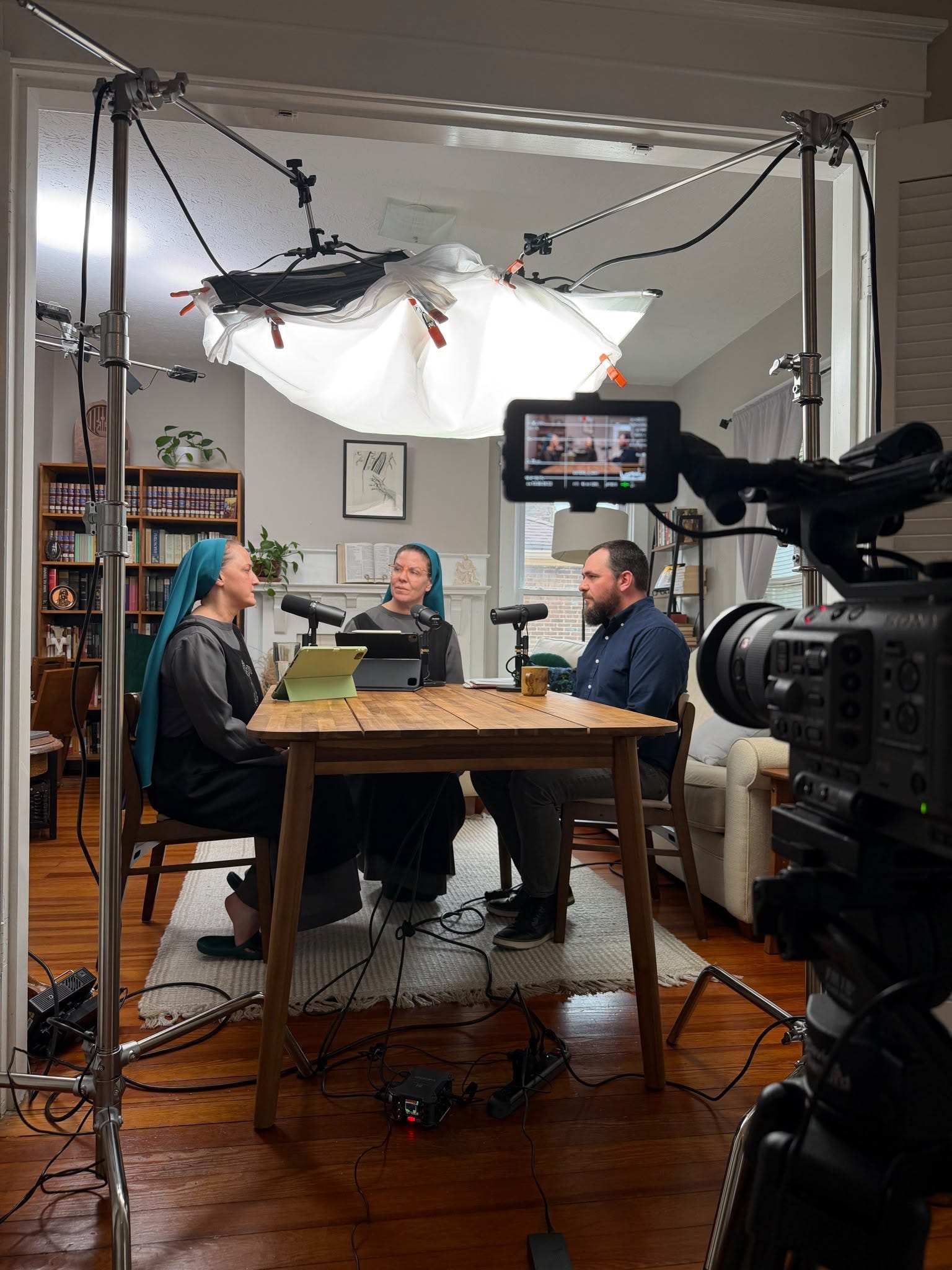
I’m also thrilled to share that the Sisters of the Little Way invited me to their home in Kentucky to record a new project with them!!
All of the work on the Substack is subsidized by the immense generosity of 81 paid patrons. In one sense, that’s a small number, only 2.6% of subscribers. But in another sense, it’s a huge number because you, dear paid subscribers, have received nothing extra from me for your financial support. I cannot thank you enough for your generosity. Without your financial investment, Third Space would not exist in its current form.
The Reality of the Gig Economy
This Substack is a crucial part of my “real job.” Like many millennials, my family’s income is in the gig economy. I work part-time as a licensed professional counselor, and the rest of my income comes from consulting and coaching work about spiritual abuse in the Church and Third Space. I never anticipated that this Substack would become a real job, a key source of my income. But it has. And I’m grateful for it.
Obviously, I’m not the first creator to make an income off of Substack. However, many of the professional Substackers put some or all of their content behind a paywall. And that’s great! Writers and podcasters deserve to be paid for their work. But I’ve decided not to do that. I always want Third Space to remain a resource that’s completely free and accessible to everyone who can benefit from it, regardless of their financial situation. That’s important to me.
But I’m realizing that you don’t know what I need unless I tell you, unless I ask.
The reality is that writing the essays and preparing for/recording podcasts take a significant amount of time, research, and emotional energy every week. Time and effort that, if I’m going to keep growing Third Space, also need to have financial growth. In the past two years, the overall subscribers have more than doubled, but the paid subscribers have only gone up by half.
My family also has more immediate financial needs. After ten years of living in the small town where I used to work at the Catholic parish, we moved closer to family, for our kids to live closer to grandparents, aunts & uncles, and cousins. We moved into our new house this summer and emptied our bank account (as one does) to repair the floors, septic system, air conditioning, and more to make it livable. Now we’re hoping that the appliances (which are all 30 years old) or vehicle don’t break down all at the same time.
Invitation
If you have the resources and value Third Space—if you open these emails and listen to the podcast—if you believe these conversations are important for the People of God, please consider becoming a paid patron today.
You won’t get exclusive bonus content for upgrading. You’ll get the knowledge that you’re directly keeping these resources free for thousands of others, supporting my family, and ensuring Third Space can continue to grow.
There are two ways to help. The first is becoming a paid subscriber. There are three paid subscription options:
The second is to make a one-time contribution via PayPal (paul@faheycounseling.com) or Venmo (@catholicthirdspace).
As a special bonus, if you sign up for the $500 tier (or make a one-time contribution of $500 or more) before Thanksgiving (Nov 26), you’ll receive a Third Space sticker and a print of this Christmas watercolor that Kristina painted (at Painted Sanctuary) as a small token of gratitude.

Oh child
Little Prince
Swaddled in old rags
You could have had…
The planets as your mobile
Golden sunbeams for a crown
The galaxies, your play-yard
The heavens as your home
But you chose instead a mother
To be held close, and rocked, and nursed
Your blanket, her sweet kisses
Your throne, her gentle arms
Your lullaby, her singing, instead of angel choirs
God with us
God with us
God is near
God in us
(Kristina Fahey)
Thank you for reading, listening, and being willing to navigate this Third Space in the Church.
Peace,
-Paul