

Paragraph 89 is perhaps my favorite passage from Pope Leo’s encyclical, Magnifica Humanitas. It’s at the end of a short section titled “An examen for the Church,” where Pope Leo makes the case that the Church must live out its own social doctrine “within its own structures” in order to be faithful to the Gospel and to be a credible witness to the world.
In all of the teaching I’ve done about spiritual abuse in the Catholic Church, I’ve contextualized spiritual abuse within the principles and framework of Catholic social doctrine. I do this because I believe the Church’s teaching on things like human dignity, freedom, conscience, subsidiarity, structures of sin, and solidarity can not only show how gravely harmful spiritual abuse is, but also how abuse of power is a systemic problem in the Church that we all can participate in or choose to disrupt. And by framing my presentation on abuse in the Church’s own teaching, I can show that I’m not trying to tear down the Church, but rather trying to help the Church live up to it’s own identity and mission.
In other words, Catholic Social Doctrine provides real tools for conceptualizing and responding to systemic abuse in the Church. So it’s both intellectually and emotionally affirming when the pope takes that exact same approach. In paragraph 89, Pope Leo says:
“Living out justice in the Church means purifying ecclesial relationships and structures from distortions that give rise to inequality, lack of transparency and abuse of power.”
Abuse of power isn’t a problem of a few bad apples; it’s a structural problem that requires structural renewal. And what are the steps of that renewal? Leo continues:
“In this regard, listening to the victims of spiritual, economic, institutional, sexual and power-based abuse, as well as abuses of conscience, is an integral part of a journey toward justice, which includes acknowledging the harm done, just reparation and taking steps to prevent it from happening again. Every power is at the service of communion and mission. All authority is at the service of the People of God.”
Listen to survivors of abuse
Acknowledge the harm we’ve done
Make just reparation
Take action to prevent the harm from happening again
These steps that Pope Leo expresses are a reiteration of the final document from the Synod on Synodality, which said:
“The Church needs to listen with special attention and sensitivity to the voices of victims and survivors of sexual, spiritual, economic, power and conscience abuse by members of the clergy or persons with Church appointments. Listening is a fundamental element of the path to healing, repentance, justice and reconciliation...the Church must acknowledge its own shortcomings. It must humbly ask for forgiveness, must care for victims, provide for preventative measures, and strive in the Lord to rebuild mutual trust” (2024 Final Synod Document, 55).
Further, these four steps are deeply connected to the three acts of the penitent in the Sacrament of Reconciliation: contrition, confession of sins, and satisfaction.
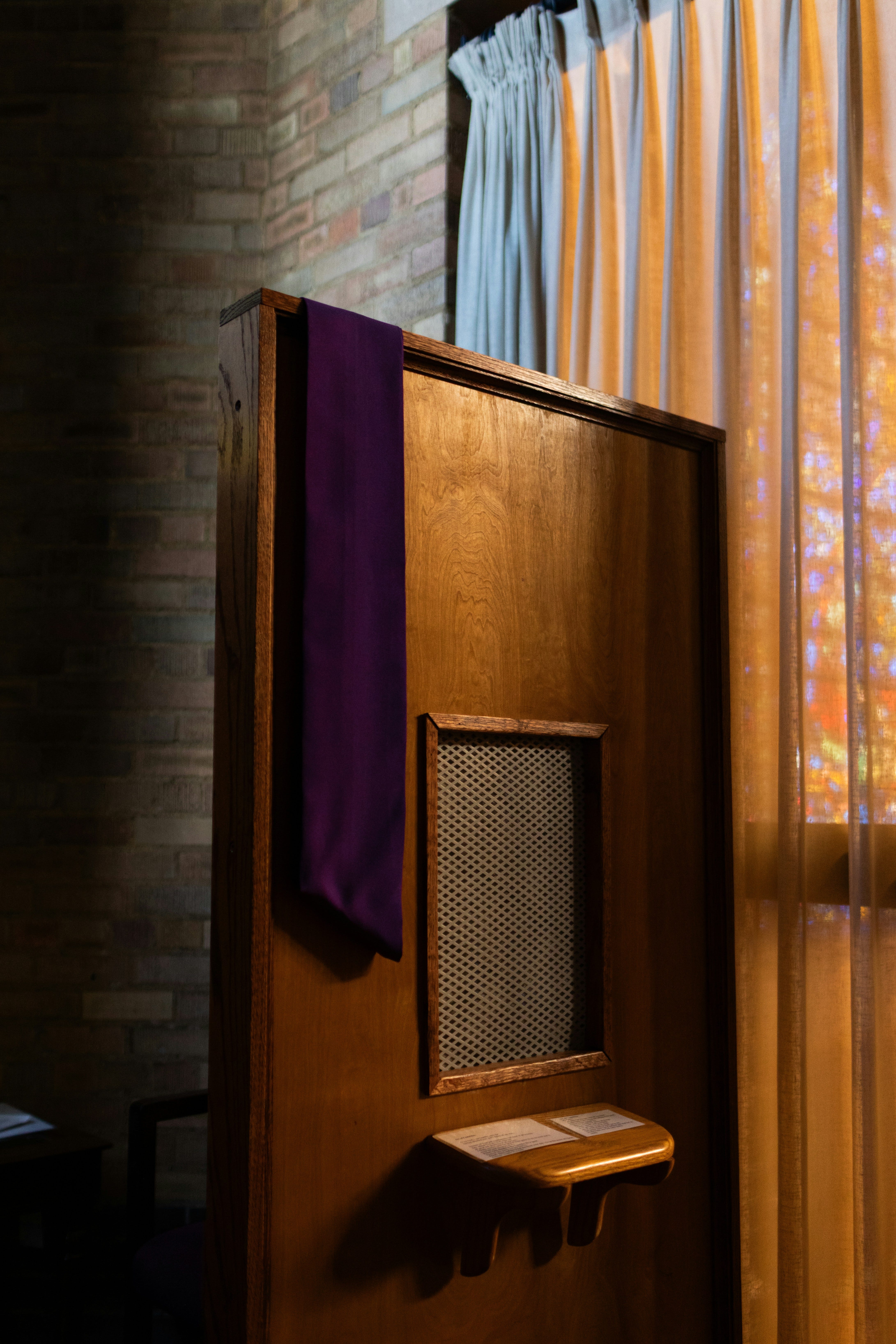
First, I examine my conscience and, if my heart is open, I experience a “sorrow of the soul” for the harm I’ve caused (CCC 1451).
Then I must acknowledge what I did, out loud, to another person. “Through such an admission man looks squarely at the sins he is guilty of, takes responsibility for them, and thereby opens himself again to God and to the communion of the Church in order to make a new future possible” (CCC 1455).
Finally, I must take real-world responsibility for the harm I caused. “Many sins wrong our neighbor. One must do what is possible in order to repair the harm (e.g., return stolen goods, restore the reputation of someone slandered, pay compensation for injuries). Simple justice requires as much” (CCC 1459).
Pope Leo, mirroring these personal acts of the penitent, is calling the Church as a whole, as an institution, as a Body, to listen to survivors of all types of abuse. We must let the stories of our brothers and sisters pierce our hearts and grieve our consciences. Then we (you, me, priests, bishops, every Catholic) must be willing to let go of our self-protection and transparently admit where the Church has caused harm. Finally, we must take (and must demand of our leaders) responsibility to make reparation for that harm however we can and do what is necessary to prevent it from happening again. And we must do this even if that means we sacrifice for it, even if it hurts, even if it costs the Church status, power, or security.
Pope Leo is clear that only when the Church lives with this kind of integrity will we “be able to bear credible witness to society” (MH 89).
If you want to learn more about spiritual abuse, you can join me for an online workshop focused on recognizing, preventing, and responding to spiritual abuse in the Catholic Church.
I’m a professional counselor who previously worked for eight years as the Director of Religious Education at a Catholic parish. I accompany those who have been spiritually abused and create resources for Church leaders to better safeguard their communities against abuse.

This workshop is for:
Individuals trying to better understand their experiences of spiritual abuse in the Church
Clergy and lay leaders interested in safeguarding their communities from spiritual abuse and abuse of conscience
Therapists or spiritual directors working with clients who have been spiritually abused
This workshop will help you:
Recognize and prevent spiritual abuse and abuse of conscience in the Church
Know the symptoms of spiritual abuse, religious trauma, and moral injury
Better understand and respond to abusive systems in the Church

Details:
This is five-part live workshop that will be held virtually. I’m running two workshops with day or evening sessions to accommodate different time zones and work schedules.
Groups will have between 5 and 12 participants and space will be filled on a first come, first serve basis. Your space in the workshop will not be held until payment is received
Group 1 - Wednesdays, 8:00-10:00am (EST) | 9/2, 9/9, 9/23, 9/30, 10/7
Group 2 - Wednesdays, 7:00-9:00pm (EST) | 9/2, 9/9, 9/23, 9/30, 10/7

Price:
This five-week workshop is $400.
Making this workshop available to anyone who can benefit from it is important to me, but it’s also an essential part of my family’s income. I don’t want inability to pay to be obstacle for you to participate. So if you can’t pay the full $400, please pay what you can (even if it’s only $10). And if you can pay more than $400, please consider giving more to offset the cost.
And if you can’t attend this workshop, but you are grateful that resources like this exist, please consider financially supporting it.
How to Pay:
1. Pay $400 with a credit card here: https://buy.stripe.com/fZu8wOaEy48ogpU8XZdIA01
2. Send a custom amount via PayPal (paul@faheycounseling.com) or Venmo (@catholicthirdspace)
I’m looking forward to having you in the workshop!
Another great piece by one of my favourite writers today. Your perspective is so important. Your mind and heart are clearly in the right place.